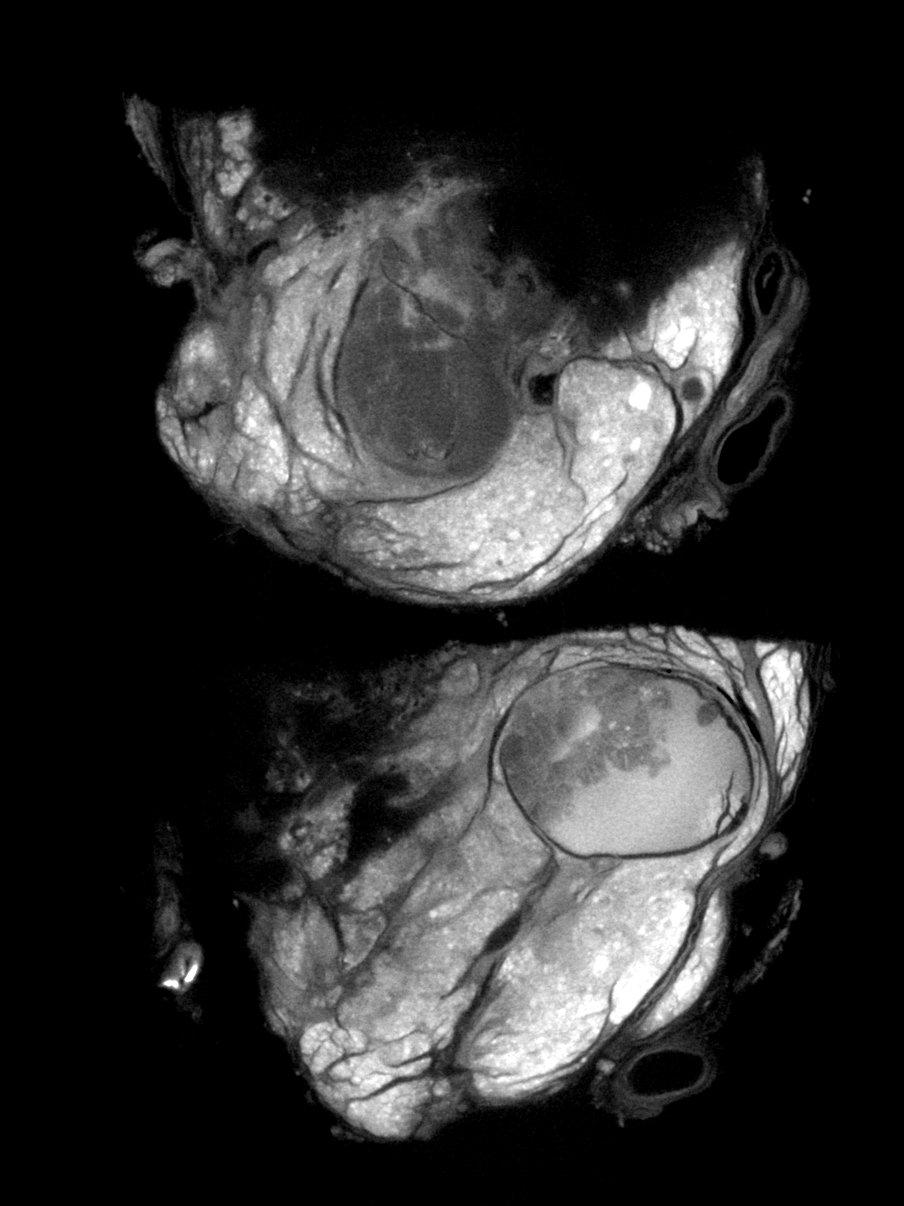
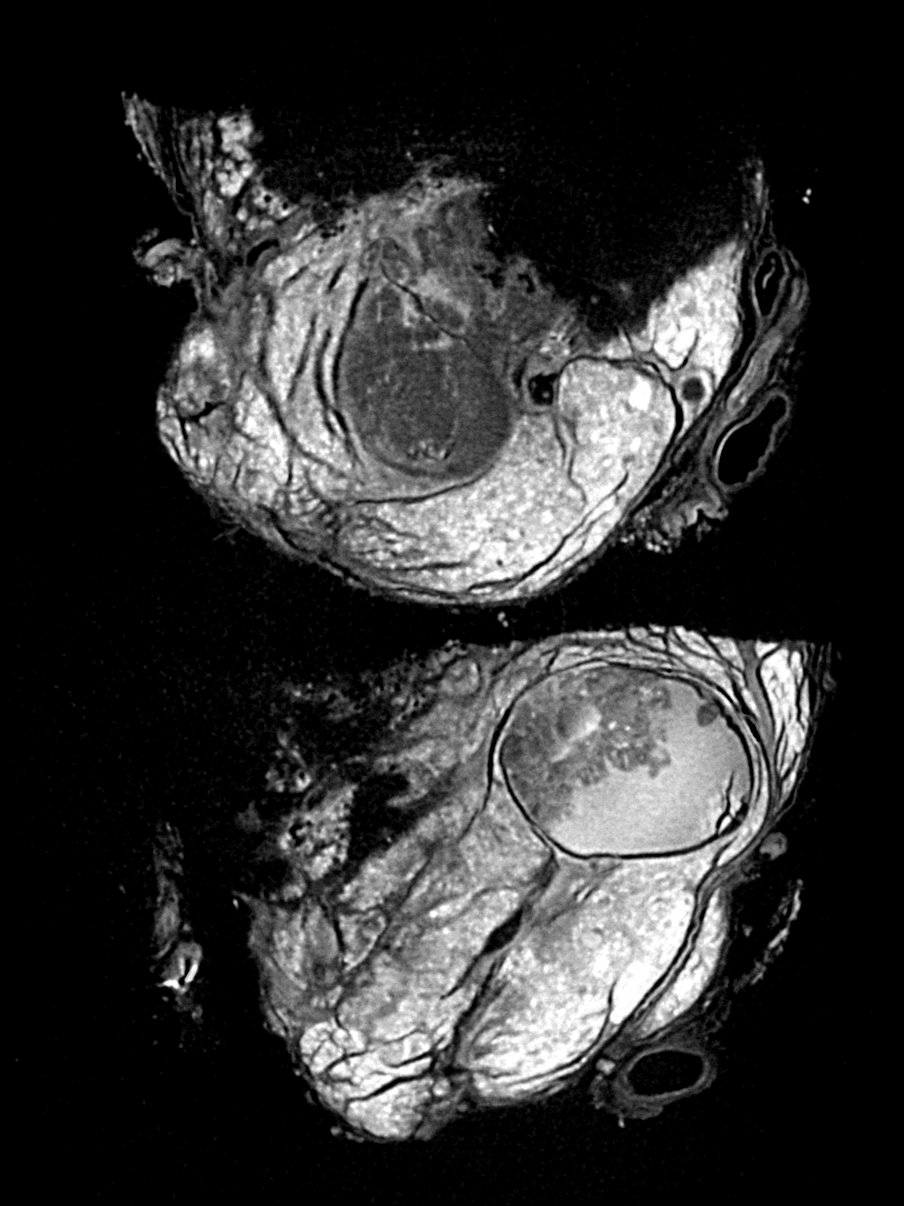
Imaging always involves a trade-off: higher resolution images mean more noise, and longer scans aren’t always practical. DeepDeblur3D is a deep learning model that breaks this trade-off by simultaneously denoising and sharpening 3D micro-CT volumes in a single pass.
The model is a compact 3D U-Net trained on 467 micro-CT volumes covering a wide range of samples, including biological tissue, insects, wood, rocks, and industrial materials, acquired across multiple scanner platforms at Empa. This diversity makes it robust and scanner-agnostic, unlike most existing methods that are tailored to a specific setup.
A key feature is the inference-time control mechanism, which lets users independently tune the denoising and sharpening strength without retraining. This makes it easy to adapt to different scan qualities and analysis goals.
Results at a glance:
- +2.38 dB PSNR improvement over degraded input on validation data
- 35% improvement in perceptual similarity (LPIPS) compared to classical filters
The model is released as an open-source Napari plugin, making it accessible for routine use without any deep learning expertise.
References
[1] Tajbakhsh, K., & Zboray, R. (2026). DeepDeblur3D: A 3D U-Net for denoising and deblurring micro-CT data. Tomography of Materials and Structures, 11, 100088. https://doi.org/10.1016/j.tmater.2026.100088
[2] Tajbakhsh, K. DeepDeblur3D Napari plugin [Source code]. GitHub. https://github.com/kiataj/deepdeblur3d-app